
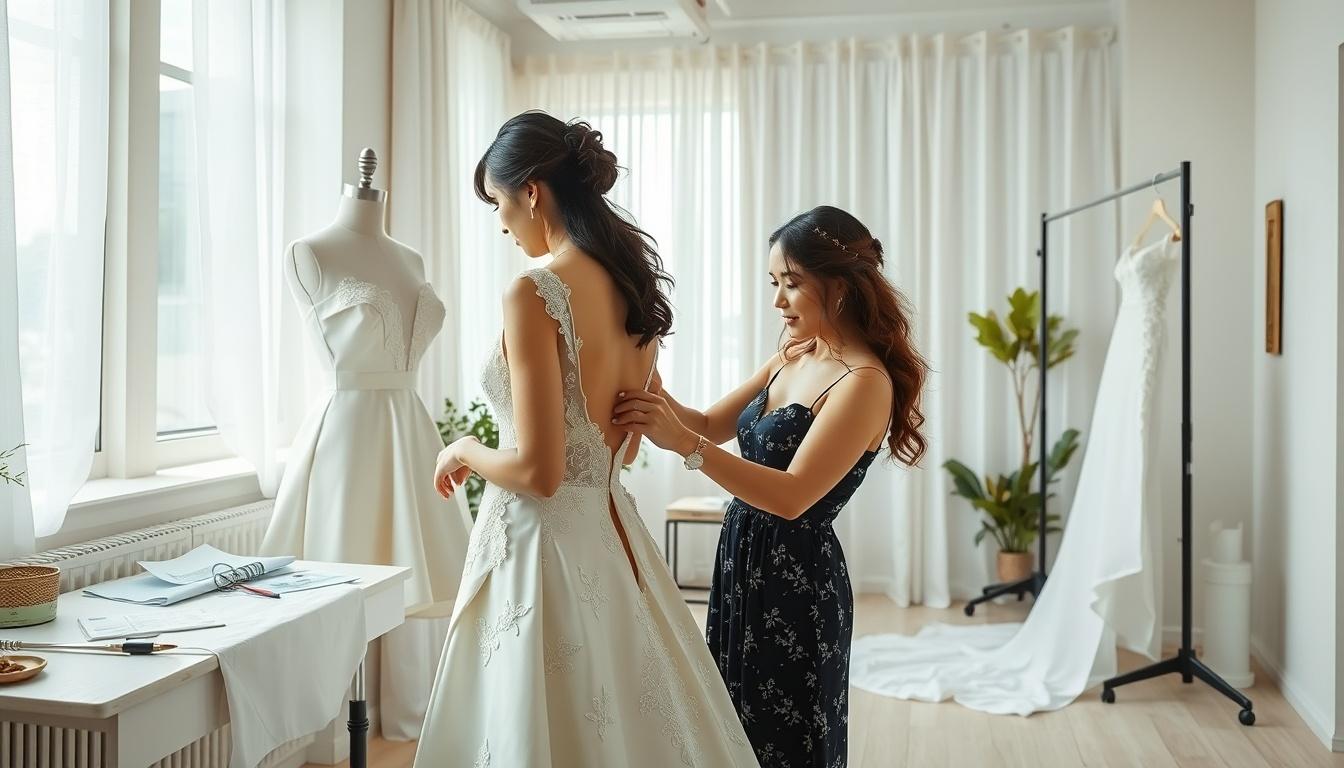
Bridal Alterations That Fit the Moment
Bridal and occasionwear alterations begin with a careful review of the garment, including its seams, structure, and fabric condition. That first assessment helps define what can be adjusted and what should be left unchanged, so the fitting plan stays realistic from the start.
For bridal gowns, the work often follows a staged approach with two to three fittings, depending on the garment and the requested changes. Common adjustments include bodice and strap refitting, hem and train adjustment, and bustle or fastening changes, all planned after the gown has been inspected.
Plan ahead for fittings that respect your gown's construction and your event date.
From first inspection to final collection, each stage is mapped around fit, fabric, and finish.
A written alteration scope helps keep the design direction clear, while the staged fitting record tracks progress between appointments. This is especially useful when the event date is fixed and the garment needs measured adjustments rather than broad changes.
Occasionwear alterations follow the same careful process. Whether the garment needs a cleaner hemline, a better bodice shape, or a more secure fastening, the goal is to refine the fit without making promises that depend on unconfirmed construction or materials.